

Your search rankings are only one benefit of a well written SEO title tag. This serves as an indication to search engines that gives them a good understanding of the contents of your website while at the same time providing the users with a good reason why they should select your page among other search engine results. In 2026 search engines will give more weight to relevance, user intent and accuracy of content in titles than ever before.
What is a Title Tag?
A title tag purpose is to give a summary of the contents of a particular webpage to both the search engine and the user. The title tag frequently appears as a clickable title on the search engine results page as well as the online browser windows.
Title Tags Identify the Primary Message of Your Page
For search engines, title tags provide an overview of your content. Title tags enable search engines to match your web pages to appropriate search queries. If you have consistent titles on your web page, then search engines will have a better understanding of what your page is all about.
Users Read the Title Tag Before Clicking It
When looking at search results, people tend to make decisions very fast. And your title is what they see first. Therefore, a clear, descriptive, and helpful title will make your page stand out from other pages located on the same SERP.
Every Web Page Requires Its Own Title Tag
Every single page of your site is designed for its own purpose. Different sections like home page, blogs, products and services pages should be titled differently. Unique titles help search engines understand what every page means.
Why Title Tags Are Important
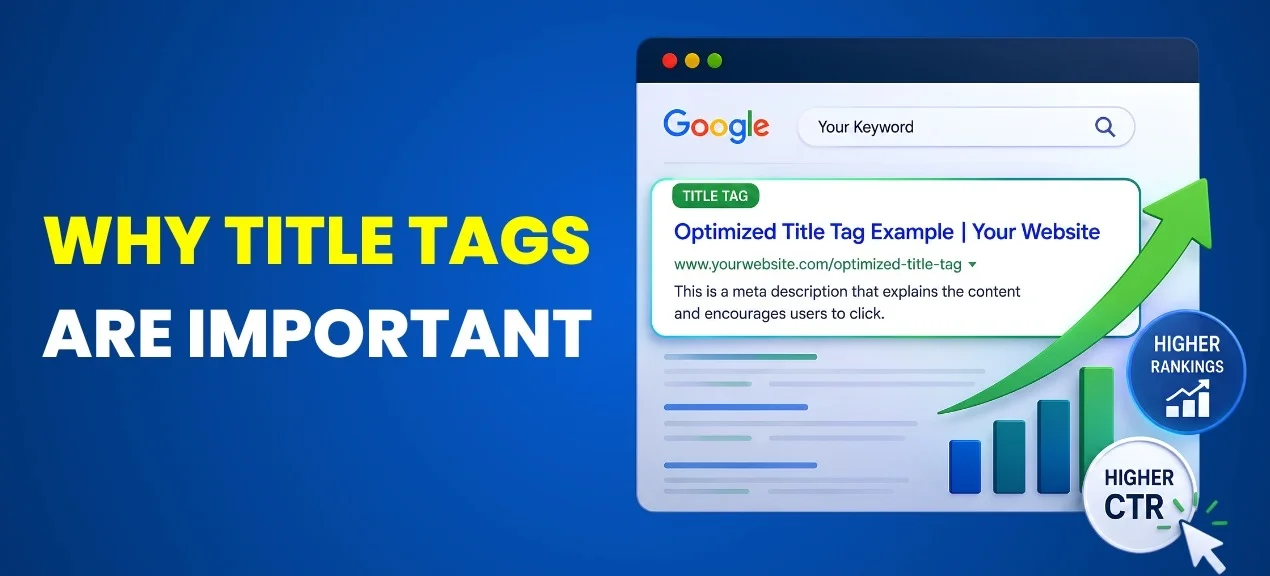
Title tags are used for determining the search rankings as well as for click through rate. The best possible content can have trouble getting to the right people if there is no proper title tag.
Title Tags Help to Achieve Greater Search Visibility
A high page rank is not necessarily going to produce traffic. People will click on links that appear helpful and credible. A headline that describes the benefit of the information contained in your page is usually favored over a vague headline even if both rank similarly.
Great Titles Establish Trust
An adequate title makes the right promise to the users. If the users see what is promised in the title, they spend more time on your pages and visit other pages too.
How to Implement a Title Tag on Your Website
Excellent title tags are only beneficial once they are shown on your website. The process differs based on the platform you use but the goal is the same. Incorporate a title that enhances your website and helps your search engine optimization strategy.
For WordPress Users
Title tag management is made easy with WordPress. The majority of SEO plugins let you give each page and post a unique title. Launch the page editor or fill in the title field with your SEO title and then save your modifications. Before publishing make sure the title is readable and stays within the proper length by looking at the preview.
Double Check Your Title Before Publication
Do one last check before your web page goes online. Look at the title as if it were listed in the search engine results. The title should contain your target keyword and describe what the web page is all about.
How to Audit Your Existing Title Tags
Auditing title tags is essential in identifying weak pages before their performance negatively affects SEO. Doing it regularly ensures organization of your website and makes sure that search engines comprehend your web content. The audit will also improve the user experience and the click-through rate.
Check All the Important Pages
It is recommended to start by checking all the important pages such as your homepages, blogs or services and products. Analyze every title and try to establish whether it corresponds to the content. Change any outdated or generic title to a descriptive one reflecting the content of the page.
Identify Missing and Duplicate Titles
Some websites have pages that lack title tags and others that have duplicate titles. Duplicate title tags and missing title tags confuse search engines. Therefore it is important to check your website for duplicates and change them into unique titles.
Analyze Results and Update
SEO continues to change so your title tags should change when needed. Review search performance, click through rates and ranking data every few months. If a page receives many impressions but few clicks, test a stronger title that offers more value and better matches search intent.
Common Errors in SEO Title Tags to Avoid
Many website owners have made SEO title tag mistakes that negatively impact the online presence of their website in terms of poor rankings and low click-through rates. A single mistake can ruin the entire optimization process of a website. By not making the following mistakes, you will help make your websites easily understood.
Keyword Stacking
There are those who believe in repeating keywords in order to boost rankings. In fact, title tags containing many keywords make the titles appear to be very spammy. Search engines today do not consider the number of keywords but rather their relevancy to the main content. Thus, use your primary keyword once and only once.
Too Short Titles
A title that is too short will fail to convey information about the page. Both search engines and visitors will get very little information regarding your website. For example, “SEO tips” is not a good title at all because it says nothing to visitors.
Title Tags That Are Too Long
The title tag that is too long does not always appear on the page of search results. Important words that can convey your message are located at the end and are not included in the search result. Therefore, try to make your title tag concise and clear by removing any unnecessary words.
Missing Keyword from Title Tag
A title tag that omits the primary keyword forfeits the chance to generate crucial traffic. Search engines are informed about the page’s primary topic by the term. If using your keyword in the title tag appears appropriate, do so.
Deceptive Clickbait Headlines
The headline should be relevant to what is present on the page. While deceptive headlines could entice the user initially, he or she will leave the site soon since there is nothing to see there. This will result in loss of trust and poor performance in the long run. Write truthful headlines.
Conclusion
If you’re looking to improve your website’s search visibility, explore our Professional SEO Services to optimize every aspect of your website.An effective title will allow search engines to interpret your page as well as provide a compelling reason for the user to click on your page. Choose short and descriptive titles, placing your key phrase at the beginning to indicate the offer of your page. Make sure that each of your URLs has a unique title. You must periodically check your title tags and make any necessary modifications if search intent shifts.