
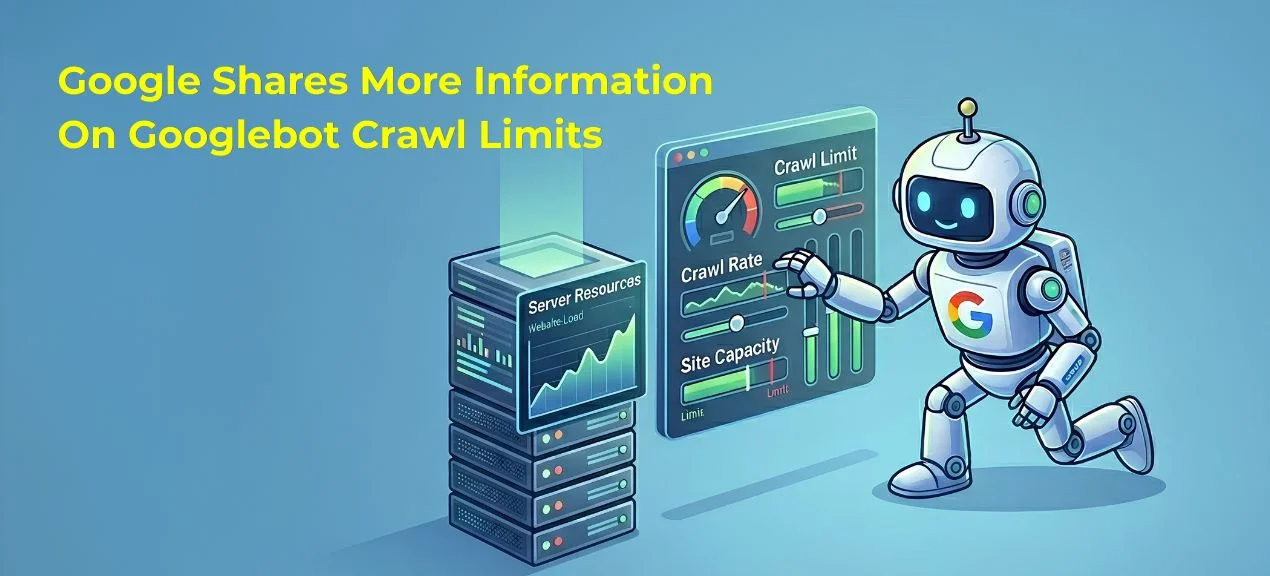
What Are Googlebot Crawl Limits?
More information on Google’s crawl limits has been released by Google, which demonstrates that there isn’t a universal rule across all Google crawlers. Google’s crawling system employs a configurable limit that is adjusted based on product, file type, and processing requirements. SEOs believe that the story should not be about a recent restriction, but rather about Google’s explanation of how its crawling infrastructure has been functioning.
- According to Google, the crawl limits of Googlebot are flexible and not a definitive set for all crawlers and file types.
- These restrictions aim to safeguard Google’s infrastructure and minimize the processing burden of large documents.
- SEO will prioritize crawl efficiency and lighter pages over sudden ranking changes. This update is different for both content and design.
Google’s Latest Update on Crawl Limits
Update 1: February 3, 2026
Google updates the documentation for its official Googlebot and general crawlers.cct. The Googlebot page now includes a crucial new section that allows the crawling of two different file types and one PDF for Google Search. Additionally, the page clarifies that CSS files are loaded separately and JavaScript files require separate loading processes for their own content. MB limit. Only uncompressed data falls within this limit.
Barry Schwartz stated on Search Engine Roundtable that Google had revised the documentation and emphasized more precisely documented limits for Googlebot-specific limitations. The details had already been positioned in a less intuitive place.
Update 6–8, 2026
not alter behavior. The 2. MB is exclusively used by Googlebot and web search.io? He endorses the Tame-the–Bot (Dave Smart) tool for testing, but notes that in practice the issue is ‘very rare’.
February 11, 2026
A third revision to Google’s general crawler documentation…. The new phrasing suggests that certain Google crawlers, such as the Googlebot, may be restricted to smaller data sizes, like 2MB.
The “for example” is remarkable. It no longer identifies the 2nd person. As an example, MB is not the absolute limit, but rather a value for some theoretical limit. The 2nd edition had been formulated in the previous one.? MB much more concretely. It is still unknown whether Google deliberately spares wording, or if they’re just using language from different documentation teams. Why? Evaluation: The three adjustments made in just nine days reveal that Google itself had trouble with the communication. The softening on February 11 indicates that the 2 are softer.? While the MB is considered rather than a hard limit, it still serves as if tests were conducted and demonstrates that truncation occurs at 2/3 times.
Google’s Latest Update on Crawl Limits
What Exactly Is Googlebot? The web crawler Googlebot uses to find, retrieve and index web pages is called Google Search Web Data Index (Google Bot).. By sending automated requests to websites, it reads the content and stores its data in Google’s index, ensuring that search results are displayed. Both mobile and desktop device simulating engines are governed by identical rules in Googlebot’s crawling and indexing capabilities.
Impact of Crawl Limits on Large Websites
The crawling system of Google has shifted its focus from general infrastructure restrictions to specific limits on Googlebot Search. What is the new guide to file size limits? (View and download). By making this distinction, site owners can better understand the requirements for their Search index. Default Crawler Limit —Google’s default limit for uncompressed content has been in place for years, but it may not be available to crawlers beyond MB. The search engine journal reported that Google’s recent change was primarily focused on clarifying where documents should be documented, not on creating a new crawl rule. Specific file types dictate the precise rules that Googlebot follows when crawling for Search indexing, as outlined by Google for developers.
Internal Linking & Crawl Efficiency
There is a difference in the size of PDF files depending on their type. Googlebot will read up to 64 bits of a PDF when it crawls it for Google Search indexing. The higher limit on uncompressed content in Google’s tool for search results is a result of PDFs being frequently published by newsrooms, including investigative reports, downloadable supplements, and digital magazines. Keep crucial data within the initial 64. How does this work? If the PDF is crucial to search visibility, a significant amount of data should be saved in one megabytes.
Common Misconceptions About Crawl Budget
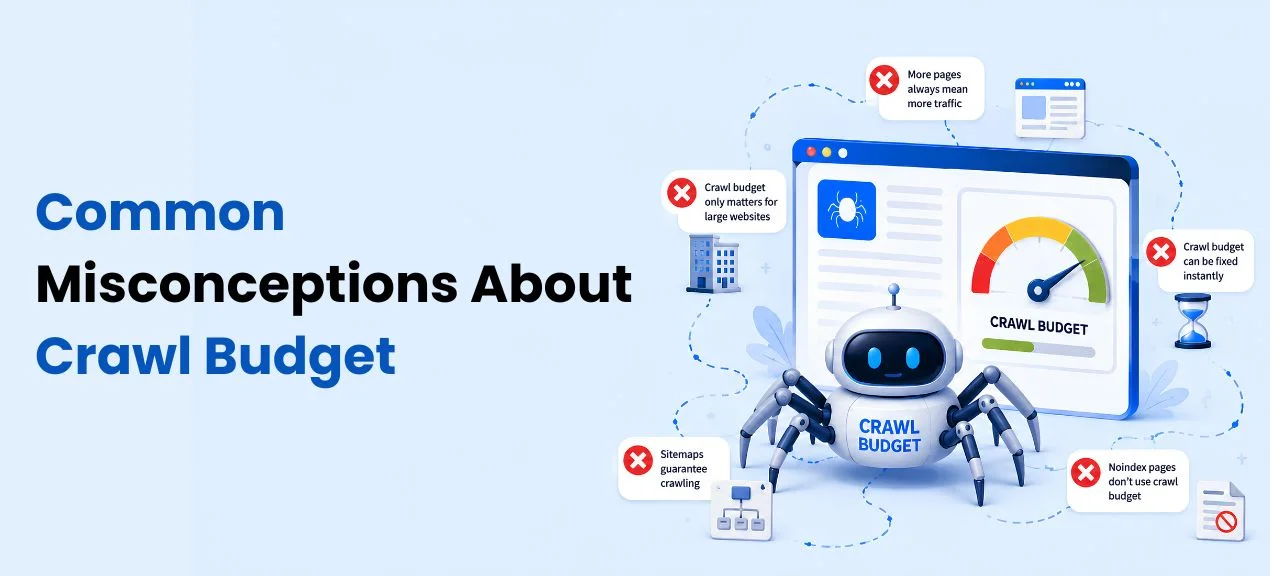
Despite its potential, there are several misconceptions about the potency and scope of Googlebot.
Here are four we’ve explored:
1. Googlebot Intermittently Crawls a Site.
Googlebot crawls sites on a regular basis, sometimes even daily. This is true. Perceived quality, novelty, relevance, and popularity are factors that determine the frequency of such sites.
As previously mentioned, the Google Search Console (GSC) can be utilized to request a crawl.
2. Googlebot Makes Decisions About Site Ranking.
According to Martin Splitt, Web Master Trends Analyst at Google.18, Google now regards this as a separate part of the crawl, index, and rank process, although it was once accurate.
In spite of this, it should be pointed out that a site’s ranking is determined by various factors such as its content, sitemap or other key elements like pages and links.
3. Googlebot Takes Control of Private Areas of a Site.
Unlike humans, the bot does not comprehend “private content” and is only required to index sites unless the site owner instructs it otherwise.
Access to certain web pages can be unrestricted within the GSC if necessary and all relevant measures are taken.
4. Googlebot Activity Might Cause Site Workability Strains.?
Google’s resource constraints and their desire to avoid site disruption have caused limitations in the Googlebot process. Why?
Final Thoughts
Splitt stated that they crawl a bit and then increase their speed. We lower our levels of error when we notice mistakes.
The GSC can cause a delay in crawls, and when some sites contain several hundred thousand pages, Googlebot breaks it down after multiple visits.