
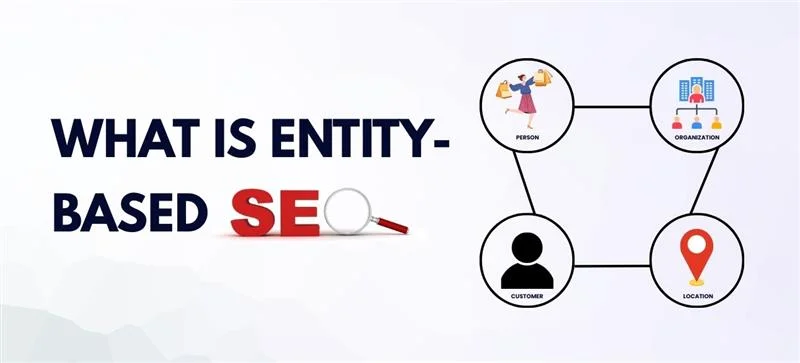
What is Entity-Based SEO?
Entity SEO uses context and intent in addition to keywords to provide tailored search results and assist users in finding what they’re looking for. Google and other search engines are becoming more intelligent every day to produce the most precise results.
It is a reality that some subtleties and languages that are easily understood by people are incomprehensible to machines. The terms are frequently processed by search algorithms, but entity SEO connects entities by creating a knowledge graph from multiple reliable sources.
For example, if you search for “Best Batman Movie Actor” on Google, a list of all the actors who have portrayed Batman in various films would appear.
- Create the main entity.
- Company profile on Google.
- Social media profiles: Facebook, LinkedIn, YouTube (actual followers not required)
- Structured Data Schema: Shows Organization, Local Business, Same As, and Social Networks.
- Create topic permissions.
- Write 10 articles on a narrow range of related topics.
- Use long-tail keywords like “Best tips for troubleshooting your air conditioner” or “Signs your air conditioner is malfunctioning.”
- Each article included brand mentions, NAP information, and internal links.
Object cue reinforcement:
- Publish PR style articles on free high DA platforms (Medium, Reddit, etc.).
- Some brand mentions on local forums.
- Share your post on Twitter and Facebook for easy participation.
- Main keyword: Moved from position 98 to position 9.
- 4 long-tail keywords ranked in the top 5
- No backlinks will be created (except for references to your organization).
- Google Business Profile now appears in local map packages.
Why it works (especially in 2026)
- Creating a connected brand presence sends trust signals that backlinks alone cannot provide.
- It is difficult for competitors to replicate an organization’s credibility unless they build it properly from the ground up.
Differences between entity SEO and traditional SEO
The difference between entity SEO and traditional keyword SEO goes deeper than tactics. They represent very different philosophies about how research should work.
Traditional Keyword SEO Approach
- Traditional SEO operates on string matching logic
- Target specific keyword phrases
- Optimize for exact-match or close-variant keywords
- Track rankings for individual keyword positions
- Create separate pages for similar keyword variations
- Focus on keyword density and placement
This approach made perfect sense when search engines primarily matched query strings to document text.
But that’s not how modern search works anymore.
A must-have SEO approach
- Entity references work based on semantic understanding.
- Identify the main purpose each page represents.
- Identify secondary objects that provide context.
- Create content based on subject sets rather than keyword lists.
- Create thematic clusters with a clear star-shaped architecture.
- Establish connections between organizations through internal collaboration.
- Use structured data to explicitly convey information about objects.
The basic difference: Keyword SEO seeks to capture queries. The essence of SEO is more important than the theme.
case study
Imagine you want to rank for WordPress performance optimization. Traditional keyword.
SEO approach:
Convey topical authority in a few thin pages.
Essential SEO approaches:
- Create a one-stop shop for optimizing WordPress performance.
- Include non-essentials: caching, image optimization, database optimization, CDN, hosting quality.
- Create subdivisions for specific techniques that address different research objectives.
- Connect everything using semantic internal links.
- A substantive approach will naturally rank for all keyword variations, not because of an exact string match, but because Google has a comprehensive understanding of the topic.
How to optimize your ecommerce website using Entity SEO
Define and structure entity sets on your website.
Entity sets group multiple entities based on common characteristics and attributes.
For example, a fast fashion website might categorize product pages into entity sets based on product category, gender, fashion blogs, and bestsellers. For e-commerce platforms, this recognition and structuring of sets of entities is essential. Enhance your existing content, optimize your website architecture, and establish a solid foundation for SEO by implementing category structured data. 2. Connect entities appropriately to create a knowledge graph.
We talked about knowledge graphs earlier in this article. A knowledge graph is an organized structure that you can create when designing the layout of your website.
Benefits of entity SEO
Entity-based SEO, as you already know, is an evolution of traditional keyword SEO. Over time, improvements in automated NLP and new search channels such as digital assistants and chatbots have made the search process and the queries themselves more complex than ever.
Benefits for marketers:
Improving your e-commerce with SEO increases exposure and visibility. Incorporating keyword research into your e-commerce site and implementing a good SEO directory (more on that later) will help you identify and incorporate more popular keywords that aren’t already included in your keyword strategy. Advantages of e-commerce:
For e-commerce channels, entity-based SEO brings all products under the umbrella of a single organization.
Conclusion: Why Entity-Based SEO is the Future of SEO
Optimizing your e-commerce site with SEO can help you become a market leader and get you much further ahead than if you chose simple keyword SEO. Give your business the jumpstart it needs with our premium SEO services specifically for the e-commerce industry.